
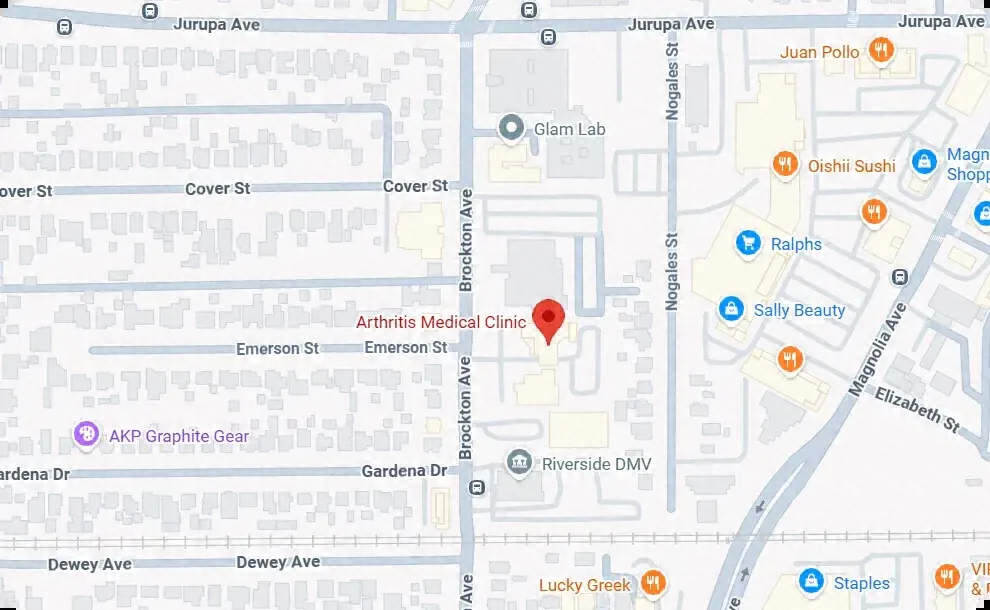
Riverside
6180 Brockton Avenue, STE 204Riverside, CA 92506
info@arthritismedicalclinic.org
Get Directions to Arthritis Medical Clinic RiversideMedical review pending
Undifferentiated connective tissue disease (UCTD) is a real autoimmune disease. Doctors use the name when symptoms do not yet fit lupus, Sjögren’s or scleroderma.
A common misconception about autoimmune diseases is that every patient fits neatly into a specific diagnostic category.
Many people assume that if they have lupus, rheumatoid arthritis, Sjögren’s syndrome, or scleroderma, the diagnosis should be obvious from the beginning. In reality, autoimmune diseases often blur the lines between diagnostic categories.
As a rheumatologist, I often see patients who clearly show signs of an autoimmune condition but don’t fully meet the criteria for a specific connective tissue disease. These patients might experience joint pain, fatigue, Raynaud’s phenomenon, positive autoimmune blood tests, or other symptoms that strongly suggest an autoimmune process is at work.
Yet, even after thorough evaluation, their symptoms don’t fall neatly into any single diagnosis. This situation is known as Undifferentiated Connective Tissue.
Although the name might sound uncertain or incomplete, UCTD is a well-recognized autoimmune condition that affects thousands of people worldwide. In fact, many individuals with UCTD experience stable symptoms for years and never progress to a more defined connective tissue disease.
Understanding what UCTD is—and what it isn’t—can help reduce anxiety and provide clarity about what to expect in the future.
Undifferentiated Connective Tissue is an autoimmune disorder characterized by signs and symptoms of a connective tissue disease that do not meet the full classification criteria for a specific rheumatic condition.
In simpler terms, the immune system is showing evidence of abnormal activity, but the disease pattern has not developed into a clearly defined diagnosis, such as:
This doesn’t mean the symptoms are mild or imagined. It simply means the disease doesn’t currently fit the established criteria for another specific connective tissue disease.
Many patients feel frustrated when they hear the term “undifferentiated.” Some interpret it as “The doctors don’t know what’s wrong,” “The tests are normal,” “It’s all in my head,” or “I don’t really have an autoimmune disease.”
None of these assumptions is correct. In many cases, patients with UCTD have positive autoimmune blood tests, objective inflammation, recognizable autoimmune symptoms, and physical findings consistent with connective tissue disease.
The challenge is that autoimmune diseases can develop gradually over time. Some patients develop additional symptoms over time that eventually lead to a more specific diagnosis. Others remain classified as UCTD indefinitely.
The exact cause remains unknown. Like many autoimmune conditions, UCTD probably develops through a combination of genetic and environmental factors.
Researchers continue to study why some people go on to develop a specific connective tissue disease while others remain in the UCTD category.
One reason UCTD can be hard to identify is that symptoms vary widely from person to person. Some patients experience only a few symptoms, while others develop multiple manifestations.
Joint pain is one of the most common complaints, often in the hands, wrists, knees and ankles. Unlike rheumatoid arthritis, significant joint damage is uncommon.
Persistent fatigue is frequently reported, often described as low energy, reduced stamina or feeling exhausted despite adequate rest. Fatigue can significantly impact daily life and productivity.
Many patients with UCTD develop Raynaud’s phenomenon: fingers or toes that become white, blue, then red in response to cold temperatures or emotional stress. Raynaud’s is often one of the earliest signs of an autoimmune disease.
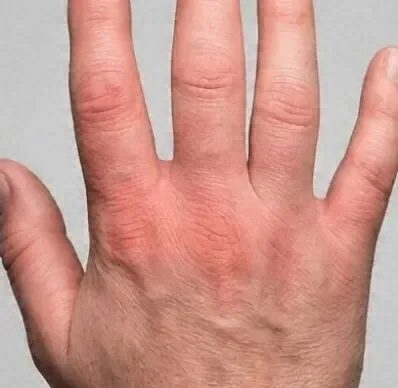
Some individuals develop puffy or swollen fingers, with tight rings, morning swelling and finger stiffness. This symptom can look similar to what’s seen in Mixed Connective Tissue Disease.
Symptoms similar to Sjögren’s Syndrome may occur, including eye irritation, dryness, increased thirst and difficulty swallowing dry foods.
Muscle discomfort may develop even when significant muscle weakness is absent: aching muscles, generalized soreness and reduced exercise tolerance.
Some patients experience photosensitivity, mild rashes and skin discoloration. Skin symptoms are usually milder than those seen in lupus or scleroderma.
Intermittent low-grade fevers can occur during periods of increased immune activity.
Many patients simply say they feel unwell without being able to point to a specific symptom. This sense of chronic illness is common in autoimmune disease.
This is one of the most common questions patients ask. The answer is: sometimes, but not always.
Many patients worry that UCTD is simply an early stage of lupus. Research suggests that most individuals with UCTD do not progress to severe connective tissue disease. Several possible outcomes exist:
This uncertainty is one reason regular follow-up with a rheumatologist is important.
There is no single test that confirms Undifferentiated Connective Tissue Disease. Diagnosis involves carefully evaluating symptoms, examination findings, and laboratory results.
Many patients with UCTD have a positive ANA test. However, laboratory findings vary considerably.
One of the most misunderstood laboratory tests in rheumatology is the ANA. A positive ANA can occur in lupus, Sjögren’s Syndrome, scleroderma, Mixed Connective Tissue Disease and UCTD. It may even occur in healthy individuals.
This is why ANA results must always be interpreted within the broader clinical picture. A laboratory result alone cannot establish a diagnosis.
Treatment depends on symptom severity and organ involvement. The goal is to improve the quality of life and reduce inflammation.
Receiving a diagnosis of UCTD can feel frustrating because it often comes with uncertainty. Patients naturally want definitive answers. However, one of the most important things I explain is that uncertainty does not mean danger.
Many patients with UCTD live active, healthy lives with appropriate monitoring and treatment. Success often depends on regular follow-up, symptom monitoring, healthy lifestyle habits, medication adherence and early recognition of disease changes.
Consider seeking evaluation if you experience persistent joint pain, Raynaud’s phenomenon, chronic fatigue, positive ANA testing, swollen fingers, dry eyes or dry mouth, or multiple unexplained autoimmune symptoms. Early evaluation can help identify autoimmune disease before complications develop.
Yes. UCTD is considered an autoimmune condition involving abnormal immune system activity.
No. Although some symptoms overlap, UCTD does not meet the criteria for lupus.
Some patients eventually develop lupus, but many remain stable with UCTD for years.
Most patients experience a relatively mild disease course, but ongoing monitoring remains important.
A rheumatologist is the specialist most commonly responsible for diagnosing and managing UCTD.
One of the most important things patients should understand is that a diagnosis of UCTD is not a failure to find answers. It is a legitimate diagnosis that reflects how autoimmune diseases often behave in the real world.
The immune system doesn’t always follow textbook definitions. Sometimes symptoms develop gradually, overlap multiple conditions, or remain stable without progressing into a specific disease category.
The key is careful monitoring, early treatment when necessary, and maintaining an ongoing relationship with a rheumatologist. With appropriate care, many individuals with Undifferentiated Connective Tissue continue to work, travel, exercise, raise families, and enjoy a high quality of life for many years.
We Are Accepting New Patients!
info@arthritismedicalclinic.org
Get Directions to Arthritis Medical Clinic Riverside
info@arthritismedicalclinic.org
Get Directions to Arthritis Medical Clinic La SierraPhones answered: Mon – Fri 9:00 AM – 5:00 PM
Wheelchair-accessible entrance and parking at every office.