
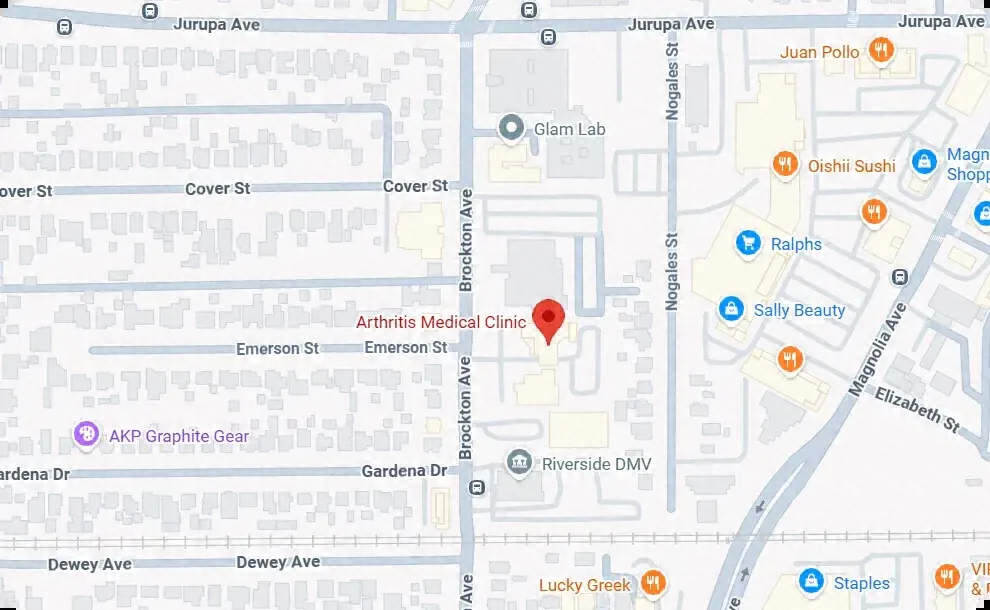
Riverside
6180 Brockton Avenue, STE 204Riverside, CA 92506
info@arthritismedicalclinic.org
Get Directions to Arthritis Medical Clinic RiversideMedical review pending
Fibromyalgia is a long-lasting problem that causes pain and tenderness all over the body. It also causes tiredness and trouble sleeping.

Fibromyalgia is a long-lasting problem that causes pain and tenderness all over the body. It also causes tiredness and trouble sleeping. Scientists do not fully understand what causes it. But people with it feel pain more easily.
Fibromyalgia has no cure. But doctors and other health care providers can help you manage the symptoms. Treatment often mixes three things: exercise or other kinds of movement, talk therapy that changes thoughts and habits, and medicines.
Anyone can get fibromyalgia. But more women get it than men. It can affect people of any age, even children. It usually starts in middle age, and the chance of having it goes up as you get older. It happens in people of all races and backgrounds.
You may be more likely to have fibromyalgia if you have other diseases. This is even more likely with rheumatic diseases, mood problems or problems that cause pain. These include:
Fibromyalgia tends to run in families. Some scientists think certain genes could make you more likely to get it. But people with no family history of it can get it, too.
The main symptoms of fibromyalgia include:
Other symptoms may include:
No one knows what causes fibromyalgia. But studies show that people with it feel pain more easily. They feel pain when others do not. Brain scans and other research show changes in the nerve paths that send and receive pain signals. These changes may also add to the tiredness, sleep problems and “fibro fog” that many people with fibromyalgia have.
Fibromyalgia tends to run in families. So genes likely play a part. But little is known for sure about which genes. Researchers think things outside the body also play a part. These triggers may include a disease that causes pain, such as rheumatoid arthritis. They may also include mental health problems, such as anxiety or depression.
Doctors diagnose fibromyalgia mostly from pain all over the body, along with other symptoms. Right now, no lab test or scan can show fibromyalgia. Its main symptoms, pain and tiredness, are like those of many other problems. So doctors usually try to rule out other causes first.
To diagnose fibromyalgia, your doctor may:
Your doctor may order lab tests or scans to help rule out other diseases.
Fibromyalgia has no cure. So treatment focuses on easing the symptoms. Your plan will likely mix several kinds of care. These include talk therapy, medicines and things you do for yourself, such as exercise, yoga or tai chi.
Cognitive behavioral therapy. This kind of talk therapy aims to change the way you think about pain. It can help, most of all when you use it with other treatments. You can do it one on one or in a group with a counselor. Other kinds of mental health counseling may also help.
Medicines. Many medicines can ease pain and help you sleep better. Your doctor may prescribe more than one kind at the same time.
You may need to try different mixes and doses of medicines before you find relief. Most people get better slowly.
Complementary therapies. Some people try therapies such as acupuncture, massage and hypnosis. But many of these have not been well tested in people with fibromyalgia.
Before you try these therapies, talk to your doctor about the best choices for you.
Fibromyalgia care often takes a team. But two kinds of providers treat it most:
Other health care workers may also help with your care:
Fibromyalgia can make a big difference in your quality of life. It can make everyday tasks hard. But there are things you can do to help you live with it:
Exercise is a key part of treatment for fibromyalgia. Pain and tiredness may make it hard to exercise. But it is important to be as active as you can. Research shows that regular exercise is one of the best ways to fight fibromyalgia. Even a little exercise helps. Aerobic exercise can also help you sleep better and feel less anxious and depressed.
Start slowly and do a little more over time. Gentle aerobic exercise helps most. Examples are walking, biking, swimming and exercises in water. Activities that use both the mind and body also help, such as yoga and tai chi. A physical therapist or exercise physiologist can plan an exercise program for you and keep helping you.
Check with your doctor before you start to exercise.
Learn as much as you can about fibromyalgia. Join a support group online or in person with other people who have it. A support network can help you get through hard times.
See a mental health professional if you have emotional problems. Research shows that cognitive behavioral therapy can help. It teaches skills to better control the pain.
Tiredness that does not go away is one of the hardest parts of fibromyalgia. These tips may help you sleep better and feel more rested:
Source: National Institute of Arthritis and Musculoskeletal and Skin Diseases (NIAMS), NIH, last reviewed May 2024.
We Are Accepting New Patients!
info@arthritismedicalclinic.org
Get Directions to Arthritis Medical Clinic Riverside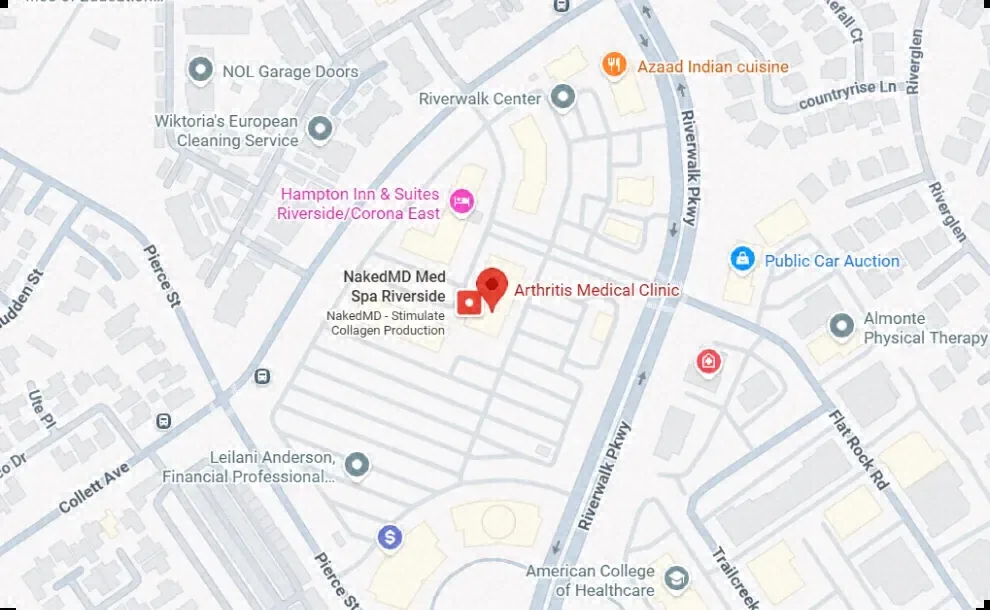
info@arthritismedicalclinic.org
Get Directions to Arthritis Medical Clinic La SierraPhones answered: Mon – Fri 9:00 AM – 5:00 PM
Wheelchair-accessible entrance and parking at every office.