Gout Treatment in Riverside, CA

Medical review pending

Gout is a type of arthritis that causes pain and swelling in your joints. It comes in flares that last a week or two and then go away.

Gout – patient symptom photo

Overview of Gout

Gout is a type of arthritis that causes pain and swelling in your joints. It comes in flares. A flare usually lasts a week or two and then goes away. Flares often start in your big toe or another part of your leg or foot.

Gout starts when a waste product called urate builds up in your body over a long time. The urate can form sharp, needle-shaped crystals in and around a joint. The crystals make the joint swell and hurt. Urate builds up when the body makes too much of it or gets rid of too little. Still, many people with high urate levels in the blood never get gout.

Gout can affect these parts of the body:

  • Joints.
  • Bursae, the small sacs that cushion the space between bones and soft tissue.
  • Tendon sheaths, the thin covers around tendons.
  • Kidneys, because high uric acid levels can lead to kidney stones.

Gout can move through several stages:

  • Hyperuricemia. You have high urate levels in your blood for a long time. You may even have crystals in a joint. But you have no symptoms yet.
  • Gout flares. You have attacks of strong pain and swelling in your joints from time to time.
  • Interval gout. This is the quiet time between attacks, when you have no symptoms. Doctors also call it intercritical gout.
  • Tophi. In this late stage, crystals build up in the skin or other parts of the body. Based on where they are, tophi can do lasting harm to your joints and to organs such as the kidneys. The right treatment can stop tophi from forming.

Gout is one of the easiest kinds of arthritis to control. Early diagnosis, treatment and changes in daily habits all help. Many people stop having flares or have milder ones. Some even become gout free.

Who Gets Gout?

Many people get gout. It is more common in men than in women. It usually starts in middle age. Women rarely get gout before menopause, so they tend to get it later in life than men. Younger people get it less often. When they do, it tends to be more severe.

Symptoms of Gout

The most common symptom of gout is a painful joint. Many people have their first flare in one of their big toes. But gout can affect other joints too. Flares often start all of a sudden at night. The pain can be strong enough to wake you up. The joint may also look red and feel swollen and warm.

A flare usually affects one joint. Some things can set off a flare:

  • Certain foods.
  • Alcohol.
  • Some medicines.
  • An injury.
  • Some illnesses.

A flare usually gets better in a week or two. In between flares, you usually have no symptoms. Some people have flares often. Others may not have another one for years. But if gout is not treated, flares may come more often and last longer over time.

If gout goes untreated for a long time, tophi can form. A tophus is a hard lump of needle-shaped crystals. It forms under the skin, in and around the joints, and in other organs. At first, tophi do not hurt. Over time, they can become painful. They can also harm bone and soft tissue and change the shape of a joint.

People with gout may be more likely to have other health problems, mostly with the heart and kidneys. Common ones include:

  • High blood pressure (hypertension).
  • Long-term kidney disease.
  • Obesity.
  • Diabetes.
  • Kidney stones (nephrolithiasis).
  • Heart attack (myocardial infarction).
  • Heart failure, when the heart cannot pump as well as it should.

Cause of Gout

Gout happens when urate builds up in your body and forms needle-shaped crystals in your joints. This causes pain, swelling and redness. It can also make the joint hard to move and use. But not everyone with high urate levels gets gout.

Urate comes from purines. Purines are found in your body’s tissues and in many foods. When purines break down, they turn into urate. Most of the time, urate leaves your body in your urine. But sometimes the body makes too much urate or removes too little. Then urate builds up in your blood, and crystals form in your joints. The crystals cause swelling and pain. These attacks are called gout flares.

Researchers are still learning how genes and the world around us lead to high urate levels. Some things raise your chances of getting gout:

  • High urate levels.
  • Family members who have had gout.
  • Being male.
  • Going through menopause.
  • Getting older.
  • Drinking alcohol.
  • Drinking sugary drinks, such as soda.
  • An unhealthy diet with a lot of foods high in purines. Most of these foods come from animals.

Some health problems can raise your risk of gout:

  • Being overweight or having obesity.
  • Metabolic syndrome. This is a group of problems that includes high blood pressure, high blood sugar, unhealthy cholesterol levels and extra fat around the waist.
  • Long-term kidney disease. The kidneys are damaged and cannot clean the blood the way they should.
  • High blood pressure.
  • Problems that make your cells die and get replaced fast, such as psoriasis or some cancers.
  • Rare health problems passed down in families (Kelley-Seegmiller syndrome or Lesch-Nyhan syndrome) that raise urate levels.

Some medicines can raise your risk of gout:

  • Diuretics, or water pills, which help your body get rid of extra fluid.
  • Low-dose aspirin.
  • Niacin, a vitamin, when you take large amounts of it.
  • Cyclosporine. This medicine calms the immune system. People who have had an organ transplant take it. It is also approved to treat some autoimmune diseases.

Diagnosis of Gout

Gout is often fairly easy to diagnose. But a few other conditions can look like gout. To find out if you have gout, your health care provider may:

  • Ask about your health history. This includes your symptoms, your risk factors and any medicines you have taken.
  • Check the joints that hurt.
  • Order a blood test to check your urate level.
  • Take a small sample of fluid from a painful joint, a swollen bursa or a tophus. The sample is checked under a special microscope for urate crystals.
  • Order an ultrasound or a special CT scan. These scans can show urate crystals in the joint. They can also help rule out other causes of your symptoms.

Treatment of Gout

Gout treatment can be different for each person. It depends on your symptoms and what is causing your gout. But the goals are the same for everyone:

  • Ease the pain of gout flares.
  • Stop future flares.
  • Prevent tophi or make them go away, so they do not harm your joints.
  • Treat other health problems that come with gout, such as heart and kidney disease.

Your doctor may suggest medicines that treat the cause of gout. You may also get medicines to treat a flare when it happens.

To treat a gout flare, your doctor may suggest:

  • Anti-inflammatory medicines, which ease pain and swelling. You can buy some at the store. Others need a prescription.
  • Colchicine, which helps ease gout pain. It works best when you take it as soon as symptoms start.

Corticosteroids may also help. These strong medicines calm swelling and ease pain. You can take them by mouth, or your doctor can inject them into the joint. Because they are strong, your doctor will give you the lowest dose that works.

The cause of gout is hyperuricemia, which means too much urate in the blood. Treating it is a key part of treating gout. Some medicines lower urate levels:

  • Xanthine oxidase inhibitors, which help the body make less urate.
  • Uricosuric agents, which help the kidneys flush more urate out of the body.
  • Uricase, which breaks urate down into a form the body can get rid of easily. It is for people who have not been helped by other medicines.

Other treatment may include changes to your diet and daily habits. These lower the risks that you can control.

Who Treats Gout?

These health care providers may treat gout:

  • Rheumatologists. They are experts in arthritis and other diseases of the bones, joints and muscles.
  • Primary care providers (PCPs), such as internists. They diagnose and treat adults. Most people with gout get care from their PCP.
  • Dietitians. They can teach you how to eat a healthy diet.
  • Nurse educators. They help you understand your condition and set up your treatment plan.
  • Pharmacists. They fill your prescriptions. They also teach you about your medicines and why you should take them the way your doctor told you.

Living With Gout

You can do many things to manage gout. Some changes in your daily life can help you have fewer flares and ease your symptoms:

  • Lose weight if you are overweight. Eating fewer calories and moving more helps lower urate levels. This can stop flares or make them less frequent.
  • Drink less alcohol. This includes nonalcoholic beer.
  • Stay away from sugary drinks, such as soda.
  • Stay away from red meat and organ meats, such as liver, kidney, tongue and sweetbreads. They are high in purines and may raise the risk of other health problems.
  • Stay away from some seafood, such as shellfish (shrimp and lobster), sardines and anchovies.
  • Follow the DASH eating plan. DASH stands for Dietary Approaches to Stop Hypertension. It helps many people with gout who also have high blood pressure. It can lower blood pressure and may also lower urate levels. That may help prevent flares.

The DASH eating plan means:

  • Eating plenty of vegetables, fruits and whole grains.
  • Eating low-fat or fat-free dairy, chicken and other poultry, and oils.
  • Eating less food high in saturated fat.
  • Cutting back on sugary foods and drinks.

During a gout flare, these steps can ease your symptoms:

  • Put ice on the area to ease swelling and pain.
  • Raise the arm or leg if you can, to bring down swelling.
  • Rest the joint.

Some people have frequent flares or tophi. For them, changes in daily habits are not enough. Medicines that lower urate levels in the blood are the main treatment. Take these medicines regularly, just as your doctor prescribed. This is the key to stopping flares and to preventing or shrinking tophi. A healthy weight and diet still matter too. They lower the risk of heart problems, which are common in people with gout.

Always talk with your doctor before you change your diet or your medicines.


Elevating Rheumatology Care to the Highest Standard of Excellence

We Are Accepting New Patients!

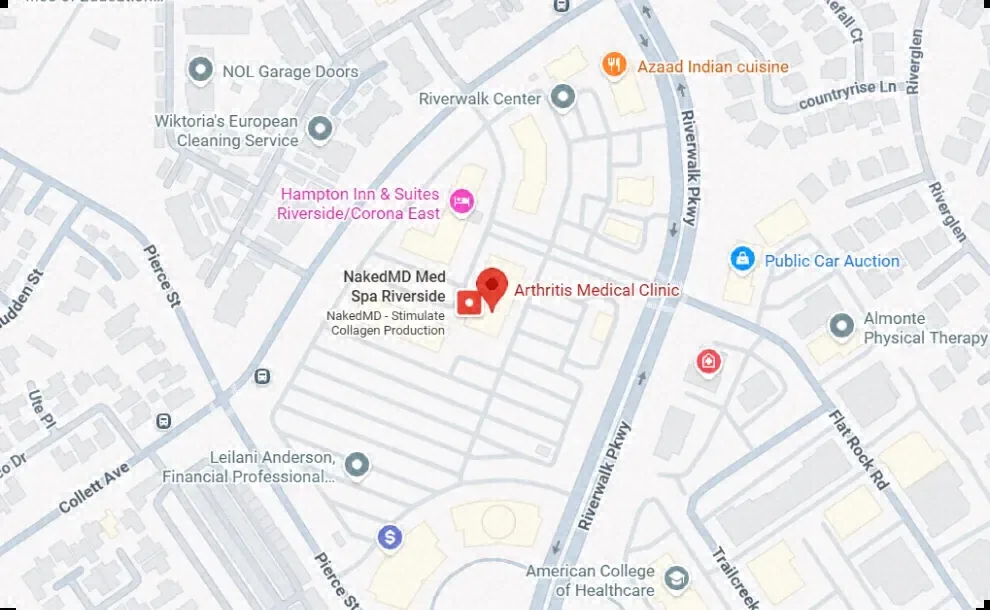
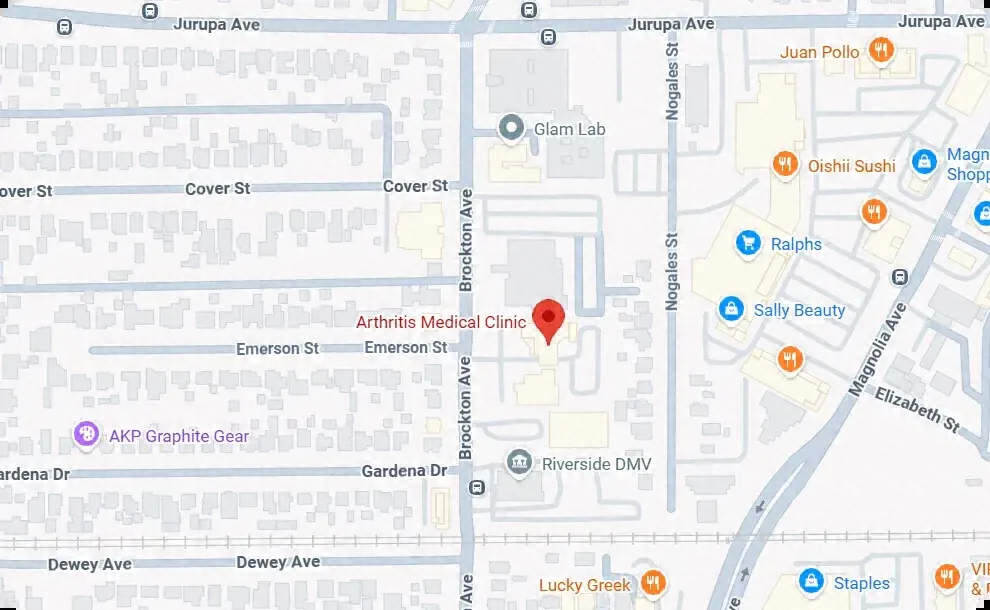
Arthritis Medical Clinic has two convenient locations in Southern California.

Office Hours

  • Monday7:00 AM – 5:00 PM
  • Tuesday7:00 AM – 5:00 PM
  • Wednesday7:00 AM – 5:00 PM
  • Thursday7:00 AM – 5:00 PM
  • Friday7:00 AM – 5:00 PM
  • SaturdayClosed
  • SundayClosed

Phones answered: Mon – Fri 9:00 AM – 5:00 PM

Wheelchair-accessible entrance and parking at every office.

Arthritis Medical Clinic logo

Request An Appointment

We are accepting new patients at both offices. Complete the form and our team will reach out to confirm a time that works for you, or call us at (951) 781-7700.

or send a request

Loading the appointment form…

Please do not include medical details in this form. In an emergency, call 911.