Overview of Osteoporosis
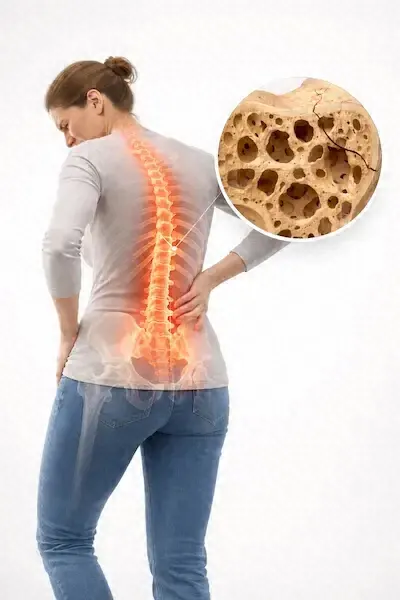
Osteoporosis is a bone disease. It happens when your bones lose mineral and mass, or when the structure and strength of your bones change. This makes bones weaker. Weak bones are more likely to break (fracture).
Osteoporosis is called a “silent” disease. You usually have no symptoms. You may not even know you have it until you break a bone. Osteoporosis is the main cause of broken bones in women after menopause and in older men. Any bone can break. But breaks happen most often in the hip, the bones of the spine (vertebrae) and the wrist.
You can take steps to help prevent the disease and broken bones:
- Stay active. Do exercises where you stand and bear your weight, such as walking.
- If you drink alcohol, drink only a little.
- Quit smoking, or do not start.
- Take your medicines, if your doctor prescribes them. They can help prevent broken bones in people with osteoporosis.
- Eat a healthy diet with plenty of calcium and vitamin D to help keep your bones healthy.
Who Gets Osteoporosis?
Osteoporosis affects women and men of all races and backgrounds. It can happen at any age. But the risk goes up as you get older. For many women, it starts to develop a year or two before menopause. Other things to know:
- Osteoporosis is most common in non-Hispanic White women and Asian women.
- African American and Hispanic women have a lower risk. But their risk is still high.
- Among men, it is more common in non-Hispanic White men.
Some medicines may raise the risk of osteoporosis. These include some cancer medicines and steroid medicines called glucocorticoids.
More women get osteoporosis than men. So many men think they are not at risk. But older men and women from all backgrounds are at risk.
Some children and teens get a rare form called idiopathic juvenile osteoporosis. Doctors do not know what causes it. But most children get better without treatment.
Symptoms of Osteoporosis
Osteoporosis is called a “silent” disease because there are usually no symptoms until a bone breaks. A break in the spine can cause bad back pain. You may also get shorter, or your spine may curve so that you stoop or hunch over. Doctors call this kyphosis.
Bones with osteoporosis can become so weak that they break on their own. They can also break from:
- Small falls, such as a fall from standing height. This kind of fall would not break a healthy bone.
- Everyday stress on the body, such as bending, lifting or even coughing.
Causes of Osteoporosis
Osteoporosis happens when you lose too much bone and the structure of bone tissue changes. Some risk factors can lead to osteoporosis or make it more likely.
Many people with osteoporosis have several risk factors. But some people get it without any clear risk factors. Some risk factors you cannot change. Others you may be able to change. Knowing about them may help you prevent the disease and broken bones.
Things that may raise your risk of osteoporosis include:
- Sex. Your chances are higher if you are a woman. Women have less bone and smaller bones than men. But men are still at risk, mostly after age 70.
- Age. As you age, you lose bone faster and grow new bone more slowly. Over time, your bones can get weak and your risk goes up.
- Body size. Thin men and women with small bones are at higher risk. They have less bone to lose than people with larger bones.
- Race. White and Asian women have the highest risk. African American and Mexican American women have a lower risk. White men have a higher risk than African American and Mexican American men.
- Family history. Your risk of osteoporosis and broken bones may be higher if one of your parents had osteoporosis or a broken hip.
- Changes in hormones. Low levels of some hormones can raise your chances of osteoporosis.
- Diet. A diet low in calcium and vitamin D, from childhood into old age, can raise your risk of osteoporosis and broken bones. Dieting too much or not eating enough protein may also raise your risk of bone loss.
- Other health problems. Some health problems that you may be able to treat or manage can raise your risk. These include other hormone and gland diseases, stomach and gut diseases, rheumatoid arthritis, some types of cancer, HIV/AIDS and anorexia nervosa.
- Medicines. Taking some medicines for a long time may make you more likely to lose bone.
- Daily habits. A healthy lifestyle helps keep bones strong.
Hormone changes that can raise your risk include:
- Low estrogen levels in women after menopause.
- Low estrogen levels in women before menopause whose periods stop. This can happen from hormone problems or from extreme exercise.
- Low testosterone levels in men. Men with health problems that cause low testosterone are at risk. But the slow drop in testosterone with age is probably not a main cause of bone loss.
Medicines that can raise your risk when taken for a long time include:
- Glucocorticoids and adrenocorticotropic hormone. These treat many problems, such as asthma and rheumatoid arthritis.
- Antiepileptic medicines, which treat seizures and other nerve problems.
- Cancer medicines that use hormones to treat breast and prostate cancer.
- Proton pump inhibitors, which lower stomach acid.
- Selective serotonin reuptake inhibitors, which treat depression and anxiety.
- Thiazolidinediones, which treat type 2 diabetes.
Daily habits that can lead to bone loss include:
- Not moving much, or being still for long periods. This can make you lose bone faster. It also leaves you out of shape, which raises your risk of falling and breaking a bone.
- Drinking a lot of alcohol for a long time. This is a major risk factor.
- Smoking. Studies show smoking is a risk factor for osteoporosis and broken bones. Researchers are still studying whether tobacco alone causes the harm, or whether people who smoke have more risk factors.
These NIAMS pages tell you more:
Diagnosis of Osteoporosis
Doctors usually find osteoporosis during a routine screening. The U.S. Preventive Services Task Force advises screening for:
- Women over age 65.
- Women of any age who have risk factors for osteoporosis.
There was not enough research, so the Task Force did not make advice about screening men.
When you see your doctor, tell them about:
- Any bones you have broken before.
- Your daily habits, including what you eat, how much you exercise, how much alcohol you drink and whether you have smoked.
- Health problems and medicines, now or in the past, that could lead to bone loss and broken bones.
- Your family history of osteoporosis and other diseases.
- For women, your history of periods.
Your doctor may also give you a physical exam. It may check:
- If you have lost height or weight.
- Changes in your posture.
- Your balance and the way you walk.
- Your muscle strength, such as whether you can stand up from a chair without using your arms.
Your doctor may also order a test that measures your bone mineral density (BMD). It is usually done at the spine and hip. BMD testing can:
- Diagnose osteoporosis.
- Find low bone density before osteoporosis starts.
- Help predict your risk of breaking a bone in the future.
- Show how well your osteoporosis treatment is working.
The most common BMD test is a DXA scan (dual-energy X-ray absorptiometry). It is quick and painless, and nothing goes into your body. You lie on a padded table while a scanner passes over you. It uses low levels of X-rays. The test measures bone density in your skeleton and in places that break easily, such as the hip and spine. A DXA scan of the hip and spine is the most trusted way to diagnose osteoporosis and predict the risk of broken bones.
Some people have a peripheral DXA. It measures bone density in the wrist and heel. This machine can be moved, so it can make screening easier. But its results may not help doctors predict future breaks or see how well your medicines work.
Your doctor will compare your results to the average bone density of young, healthy people. They will also compare them to people of your age, sex and race. If your BMD is below a certain level, you will be diagnosed with osteoporosis. Your doctor may then suggest healthy habits for your bones and medicines to lower your chance of breaking a bone.
Sometimes your doctor may suggest an ultrasound of the heel, called a quantitative ultrasound (QUS). It checks the bone but does not measure BMD. If it shows bone loss, you will still need a DXA scan to diagnose bone loss and osteoporosis.
Treatment of Osteoporosis
The goals of treatment are to slow or stop bone loss and to prevent broken bones. Your health care provider may suggest:
- Good nutrition.
- Changes in your daily habits.
- Exercise.
- Ways to prevent falls, which helps prevent broken bones.
- Medicines.
Some people get osteoporosis from another health problem. They should work with their provider to find and treat the cause. For example, if a medicine you take causes bone loss, your doctor may lower the dose or switch you to another medicine. Some diseases need long-term glucocorticoid treatment, such as rheumatoid arthritis or long-term lung disease. If you have one, you can also take medicines approved to prevent or treat osteoporosis.
Nutrition
Eating a healthy, balanced diet is an important part of treating osteoporosis. It includes:
- Plenty of fruits and vegetables.
- The right number of calories for your age, height and weight. Your health care provider can help you figure out how many calories you need each day to keep a healthy weight.
- Foods and drinks with calcium, vitamin D and protein. These help limit bone loss and keep you healthy. But it is important to eat a diet with all the nutrients your bones need.
Calcium and Vitamin D
Calcium and vitamin D help prevent osteoporosis. They also help bones reach their peak strength. If you do not get enough calcium, your body takes it from your bones. This can lead to bone loss. It can make bones weak and thin, which leads to osteoporosis.
Good sources of calcium include:
- Low-fat dairy foods.
- Dark green leafy vegetables, such as bok choy, collards and turnip greens.
- Broccoli.
- Sardines and salmon with bones.
- Foods with added calcium, such as soy milk, tofu, orange juice, cereals and breads.
Your body needs vitamin D to take in calcium from the gut. Your skin makes vitamin D when it is in the sun. Some foods have enough vitamin D on their own. These include fatty fish, fish oils, egg yolks and liver. Foods with added vitamin D, such as milk and cereals, are also a major source.
The chart below shows how much calcium and vitamin D you need each day.
| Life-stage group |
Calcium mg/day |
Vitamin D (IU/day) |
| Infants 0 to 6 months |
200 |
400 |
| Infants 6 to 12 months |
260 |
400 |
| 1 to 3 years old |
700 |
600 |
| 4 to 8 years old |
1,000 |
600 |
| 9 to 13 years old |
1,300 |
600 |
| 14 to 18 years old |
1,300 |
600 |
| 19 to 30 years old |
1,000 |
600 |
| 31 to 50 years old |
1,000 |
600 |
| 51- to 70-year-old males |
1,000 |
600 |
| 51- to 70-year-old females |
1,200 |
600 |
| >70 years old |
1,200 |
800 |
| 14 to 18 years old, pregnant/lactating |
1,300 |
600 |
| 19 to 50 years old, pregnant/lactating |
1,000 |
600 |
In the chart, mg means milligrams and IU means International Units.
If it is hard to get enough calcium and vitamin D from food, you may need supplements. Ask your health care provider what kind and how much to take. Your doctor may check your vitamin D level with a blood test and suggest a certain amount.
Lifestyle
Along with a healthy diet, healthy habits help keep your bones as strong as they can be. You should:
- Stay away from other people’s smoke. If you smoke, quit.
- If you drink alcohol, have no more than one drink a day for women and no more than two a day for men.
- See your doctor for regular checkups. Ask about anything that may affect your bones or raise your chance of falling, such as medicines or other health problems.
Exercise
Exercise is an important part of treating osteoporosis. Research shows that strength training is best for your bones. This means working your muscles against weight or resistance. Bone is living tissue. In children and adults, exercise can make bones stronger. But in older adults, exercise no longer builds bone. Instead, regular exercise can help older adults:
- Build muscle and strength and improve balance and coordination. This can lower your chance of falling.
- Do more on their own and stay independent longer.
Exercise helps people with osteoporosis. But it should not put sudden or heavy strain on your bones. If you have osteoporosis, stay away from high-impact exercise, such as jumping. To help prevent injuries and broken bones, a physical therapist or rehab doctor can:
- Suggest exercises to make your back stronger and support it.
- Teach you safe ways to move and do daily tasks.
- Plan an exercise program that fits you.
Exercise experts, such as exercise physiologists, can also help you plan a safe exercise program that works.
Medications
Your doctor may prescribe medicines for osteoporosis. Your provider will talk with you about the best choice for you. They will think about your age, sex, overall health and how much bone you have lost. Whatever medicine you take, you still need enough calcium and vitamin D. Exercise and other healthy habits still matter, too.
Medicines can cause side effects. If you have questions about your medicines, ask your doctor or pharmacist.
The U.S. Food and Drug Administration (FDA) has approved these medicines to prevent or treat osteoporosis:
- Bisphosphonates. Several of these are approved to help keep bones dense and strong and to treat osteoporosis. They slow down bone loss, which can lower the chance of broken bones.
- Calcitonin. This medicine is made from a hormone from the thyroid gland. It is approved to treat osteoporosis in women after menopause who cannot take other osteoporosis medicines.
- Estrogen agonist/antagonist. This is also called a selective estrogen receptor modulator (SERM). It and the tissue-selective estrogen complex (TSEC) are both approved to treat and prevent osteoporosis in women after menopause. They are not estrogen. But they act like estrogen in some tissues and block it in others. This helps improve bone density and lowers the risk of some breaks.
- Estrogen and hormone therapy. Estrogen, alone or with progestin, is approved to prevent osteoporosis and broken bones in women after menopause. Because of possible side effects, researchers advise using the lowest dose for the shortest time, and only if other medicines are not helping. Weigh the risks and benefits carefully with your doctor.
- Parathyroid hormone (PTH) analog and parathyroid hormone related-protein (PTHrP) analog. PTH is a form of human parathyroid hormone. It builds bone. It is approved for women after menopause and for men with osteoporosis who are at high risk of breaking a bone. PTHrP is also a form of parathyroid hormone. It is given as a shot. It is usually prescribed for women after menopause who have severe osteoporosis and have broken several bones.
- RANK ligand (RANKL) inhibitor. This medicine helps slow bone loss.
- Sclerostin inhibitor. This medicine treats severe osteoporosis. It blocks a protein, which helps the body make new bone and slows bone loss.
A RANKL inhibitor is approved to treat osteoporosis in:
- Women after menopause and men who have osteoporosis and are at high risk of breaking a bone.
- Men with bone loss who take medicines for prostate cancer that cause bone loss.
- Women with bone loss who take medicines for breast cancer that cause bone loss.
- Men and women who have not been helped by other osteoporosis treatments.
Who Treats Osteoporosis?
These health care providers treat osteoporosis:
- Endocrinologists, who treat problems with the glands and hormones.
- Geriatricians, who care for all parts of health in older people.
- Gynecologists, who treat problems of the female reproductive organs.
- Nurse educators. They help you understand your condition and set up your treatment plan.
- Occupational therapists. They teach ways to protect your joints, ease pain, do daily tasks and save energy.
- Orthopaedists. They treat bone and joint diseases and injuries and do surgery on them.
- Physiatrists, who are doctors trained in physical medicine and rehab.
- Physical therapists, who help your joints work better.
- Primary care providers, such as family doctors or internal medicine doctors.
- Rheumatologists. They are experts in arthritis and other diseases of the bones, joints and muscles.
Living With Osteoporosis
Along with the treatments your doctor suggests, these tips can help you live with osteoporosis. They can also help you prevent broken bones and falls.
Preventing broken bones is important when you have osteoporosis. Broken bones can cause other health problems and take away your independence. Exercise can make bones stronger and help prevent breaks from falls. It works best when your provider plans a program that fits you. If you have osteoporosis or bone loss, talk to your doctor or physical therapist before you start any exercise program.
Preventing falls also helps prevent broken bones. Falls raise your chances of breaking a bone in the hip, wrist, spine or other part of the body. Taking steps to prevent falls inside and outside your home can help.
Some things that can lead to falls include:
- Loss of muscle.
- Illnesses that affect how well you think or move, such as low blood pressure or dementia.
- Taking four or more prescription medicines.
- Poor vision.
- Poor balance.
- Some diseases that affect how you walk.
- Drinking alcohol.
- Side effects of some medicines.
Medicines whose side effects can lead to falls include:
- Sedatives or tranquilizers.
- Sleeping pills.
- Antidepressants.
- Anticonvulsants, which treat seizures.
- Muscle relaxants.
- Heart medicines.
- Blood pressure pills.
- Diuretics, or water pills.
If you have osteoporosis, pay attention to any changes in your body that affect your balance or the way you walk. Talk about these changes with your doctor or other health care provider. It is also important to have regular checkups. Tell your doctor if you have had problems with falling.
Things around you can also make falls more likely. Here are some tips to help prevent falls outdoors and away from home:
- Use a cane or walker to help you stay steady.
- Wear shoes that give support and have thin, nonslip soles. Do not wear slippers or sneakers with deep treads.
- Walk on grass when sidewalks are slippery. In winter, put salt or kitty litter on icy sidewalks.
- Stop at curbs and check how high they are before you step up or down.
Some ways to help prevent falls indoors are:
- Keep rooms free of clutter, mostly on the floors. Do not run electrical cords across walkways.
- Use plastic or carpet runners on slippery floors.
- Wear shoes, even indoors, that give support and have thin, nonslip soles. Do not wear slippers or sneakers with deep treads.
- If you have a pet, watch where it is so you do not trip over it.
- Do not walk in socks, stockings or slippers.
- Be careful on shiny floors. They are slick and dangerous, mostly when wet. Walk on plastic or carpet runners when you can.
- Make sure carpets and rugs have backing that does not slip, or are tacked to the floor. Use double-stick tape to keep rugs from slipping.
- Make sure stairs are well lit and have rails on both sides.
- Put grab bars on bathroom walls near the tub, shower and toilet.
- Use a rubber bath mat or a seat that does not slip in the shower or tub.
- Make your home brighter. Use night lights, or keep a flashlight next to your bed in case you get up at night. Put in ceiling lights or lamps you can turn on with a switch by the door.
- Use a sturdy step stool with a handrail and wide steps.
- Add more lights in rooms.
- Keep a cordless phone or cell phone with you. Then you do not have to rush to answer it. And if you fall, you can call for help.
- Think about getting a personal emergency alert system. You can use it to call for help if you fall.
Other tips that can help you manage your osteoporosis include:
- Talk with other people who have osteoporosis.
- Reach out to family and friends for support.
- Learn about the disease and its treatments, to help you make choices about your care.